
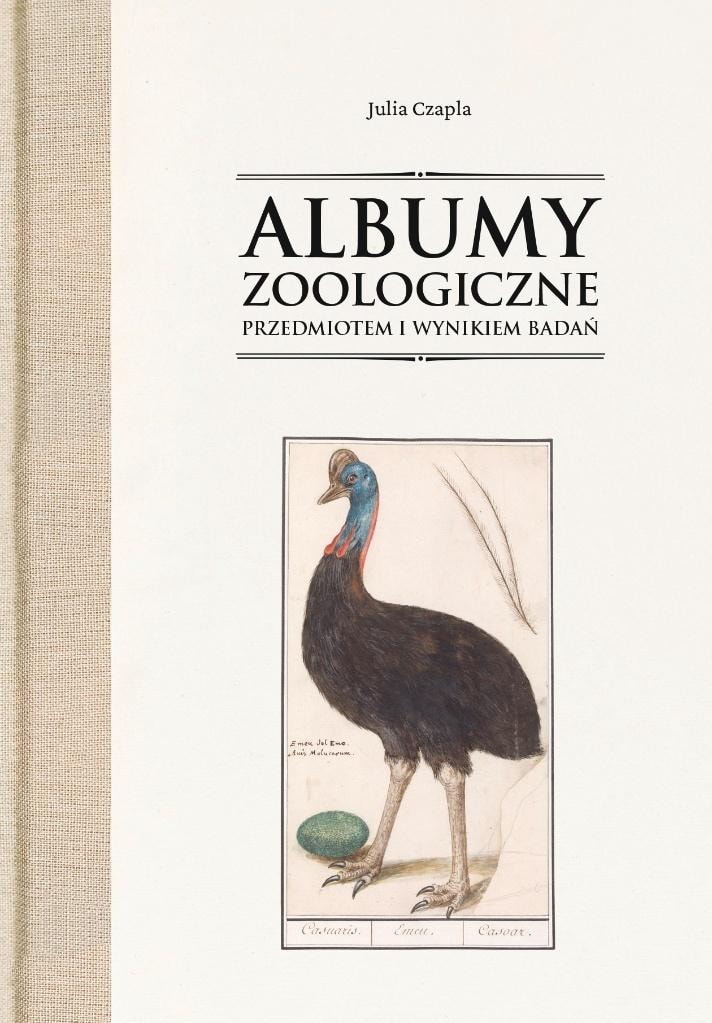
ZOOLOGICAL ALBUMS AS A SUBJECT AND RESULT OF RESEARCH - JULIA CZAPLA
Discover the fascinating world of natural history and the evolution of animal illustrations in early modern Europe. This monograph by Julia Czapla is a true journey through the centuries, showing how the approach to depicting fauna has changed - from schematic drawings to realistic ad vivum studies. Learn about the influence of eminent naturalists such as Conrad Gessner, Ulisses Aldrovandi and Carolus Clusius on the development of scientific illustration and the shaping of modern zoology. Immerse yourself in the world of zoological paper museums, created by rulers and scholars, and see how illustrations became not only research material, but also a cognitive tool and a method of publishing research results.
- Analysis of the role of animal illustrations in early modern natural history (1530-1630)
- Evolution of the approach to depicting animals, from schematic illustrations to realistic drawings
- Influence of the works of Conrad Gessner, Ulisses Aldrovandi and Carolus Clusius on the development of scientific illustration
- Zoological paper museums as a cognitive tool and a method of publishing research results
- Gradual departure from the symbolic interpretation of fauna towards its biological description
- Princely natural history collections of the Medici and Gonzaga
- Habsburg Bestiary as an example of collecting knowledge about animals
Julia Czapla's monograph is an extraordinary journey through the world of early modern natural history, showing how animal illustrations became not only research material, but also a cognitive tool and a method of publishing research results. The author analyzes the evolution of the approach to depicting animals, from schematic illustrations inspired by ancient bestiaries, through realistic ad vivum drawings, to the systematic collection of zoological paper museums by naturalists and European rulers. The work traces the influence of the works of Conrad Gessner, Ulisses Aldrovandi and Carolus Clusius on the development of scientific illustration, showing how the gradual departure from the symbolic interpretation of fauna towards its biological description influenced the shaping of modern zoology.
This book is not only a historical analysis, but also a fascinating story about the passion to learn about the world and the role that illustrations play in this process. The author discusses in detail the first attempts to organize zoological knowledge in the 16th century, the birth of modern zoology thanks to Conrad Gessner, and presents the museum of Ulisses Aldrovandi as an example of the pursuit of presenting the macrocosm in a nutshell. The reader will also learn how Italian natural history sellers used illustrations to advertise their collections, and how Carolus Clusius drew inspiration from the sketches of friends. There will also be a story about the scientific expedition of Francisco Hernndez and the princely natural history collections of the Medici and Gonzaga.
Zoological albums are not only a collection of illustrations, but above all a testimony of an era in which science and art permeated each other, creating unique works. Julia Czapla's book is a must-read for all lovers of natural history, art and science who want to deepen their knowledge about the role of illustrations in the process of learning about the animal world. It is also an excellent proposition for those who appreciate an interdisciplinary approach to research and seek inspiration in the past to better understand the present.
Specifications
| ISBN | 9788383700441 |
| Author | Julia Czapla |
| Binding | twarda |
| Year of publication | 2025 |
| Release information | Strony: 332 |
| Publisher | Uniwersytet Papieski Jana Pawła II w Krakowie |
| Number of pages | 332 |
| Format | 242x167 mm |
Zoological album as a subject and result of research
Gross price, incl. VAT
Shipping costs:
 Produkt polski
EAN: 9788383700441