
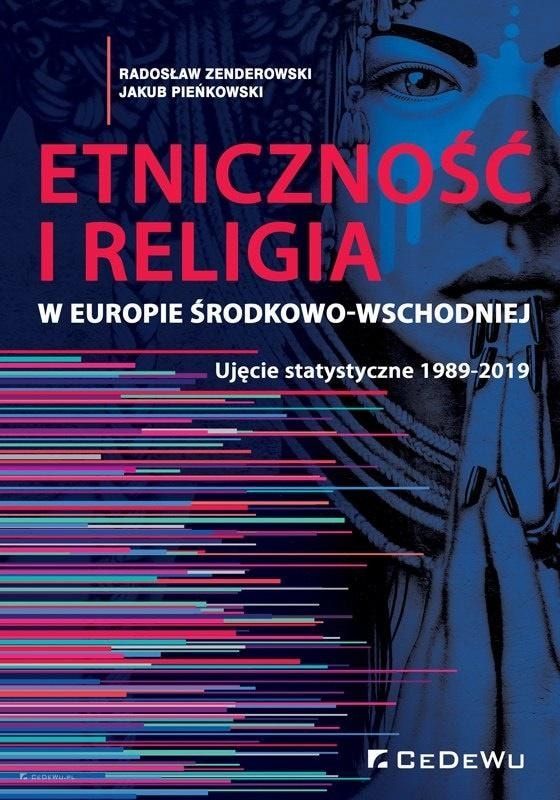
ETHNICITY AND RELIGION IN CENTRAL AND EASTERN EUROPE. STATISTICAL APPROACH 1989-2019
The book "Ethnicity and Religion in Central and Eastern Europe. Statistical Approach 1989-2019" is an in-depth analysis of ethnic and religious transformations in the region over three decades. The publication presents statistical data on the national and religious structure of individual countries, offering valuable insights into the social and political dynamics of this area. For anyone who wants to understand the complex processes taking place in Central and Eastern Europe after the fall of communism, this book is an invaluable source of knowledge.
- Statistical analysis of ethnic and religious changes in 1989-2019
- Discussion of the impact of these changes on the political situation
- Detailed data from censuses in individual countries
- Comparison with data from the interwar period
- Two-part structure: ethnic-national and religious part
- Coexistence of Indo-European and non-Indo-European nations
- Meeting of three major cultural-linguistic families: Slavic, Germanic and Romance
Central and Eastern Europe is an area where different cultures, languages and religions meet. The book analyzes the coexistence of peoples of Indo-European and non-Indo-European origin, such as Finns, Hungarians, Tatars and Turks. In addition, the influences of three major cultural and linguistic families intersect in this area: Slavic, Germanic and Romance, which makes it an extremely interesting and diverse region.
The publication also includes information on ethnic minorities such as Gorani, Pomaks, Torbeshi, Gagauz, Karaites and Tatars. Their presence adds cultural and historical color and influences the formation of national identities in individual countries. The book analyzes how changes in the ethnic structure affect social and political relations in the region.
In religious terms, Central and Eastern Europe is a meeting place for Judaism, Christianity and Islam. Within Christianity, there are Catholicism, Orthodoxy and Protestantism. The book analyzes how these religions influence social and political life in the region, and how relations between followers of different religions change over the years.
The aim of the study is to discuss the changes that have taken place in the national and religious structure of individual countries in the region in 1989-2019, and to try to answer the question of what political consequences these changes may have in the coming years. The annex contains detailed results of censuses in individual countries of Central and Eastern Europe in 1989-2019 with reference to censuses from the interwar period.
CARUNO-2025-12-02-22:58:56 cuSpecifications
| Author | Radosław Zenderowski, Jakub Pieńkowski |
| Format | 16.5x23.5cm |
| Binding | miękka |
| ISBN number | 9788381023511 |
| Year of publication | 2020 |
| Publisher | CeDeWu |
| Number of pages | 162 |
| Barcode (EAN) | 9788381023511 |
CeDeWu Ethnicity and religion in Central and Eastern Europe - statistical approach to transformation
Gross price, incl. VAT
Shipping costs:
 Produkt polski
EAN: 9788381023511